

5 Things to Check Before Planning a Fertigation System for Your Farm
Fertigation has quietly become the default choice for serious commercial growers across India: polyhouses in Bangalore, blueberry farms, cherry tomato growers in Nashik, grape and fruit orchards in Maharashtra. And it's easy to see why. Instead of broadcasting fertilizer by hand or dumping it into a Venturi tank and hoping for the best, you're feeding your crop exactly what it needs, dissolved in the irrigation water, at the root zone, on a schedule.
But here's the problem we keep running into when we talk to farmers: everyone wants "a fertigation system," but very few have actually mapped out what kind of system their farm needs. The result is either overspending on a system with more channels and automation than the farm will ever use, or underspending on something that can't keep up once the farm has three crops and five valves running different schedules.
Before you get a quote from anyone (us included), walk through these five questions first. They'll save you money, and more importantly, they'll save you from a system that looks great on paper but doesn't fit how your farm actually runs.
1. What crops are you growing, and how many fertilizer recipes do you actually need?
This is the question that decides almost everything else, and it's the one most farmers skip.
A single-crop polyhouse growing only cherry tomatoes might need just 3-4 recipes across the crop's growth stages: vegetative, flowering, fruiting, ripening. But a mixed farm growing tomatoes in one block, capsicum in another, and a nursery running propagation on the side could easily need 15-20 different recipes, each with its own NPK ratio, micronutrient mix, and target EC/pH.
Ask yourself:
- How many distinct crops (or crop and stage combinations) will you be dosing for?
- Will recipes change seasonally, or do you expect to keep tweaking them as you learn what works?
- Do you want the flexibility to save and switch between recipes instantly, or is a fixed 2-3 recipe setup enough?
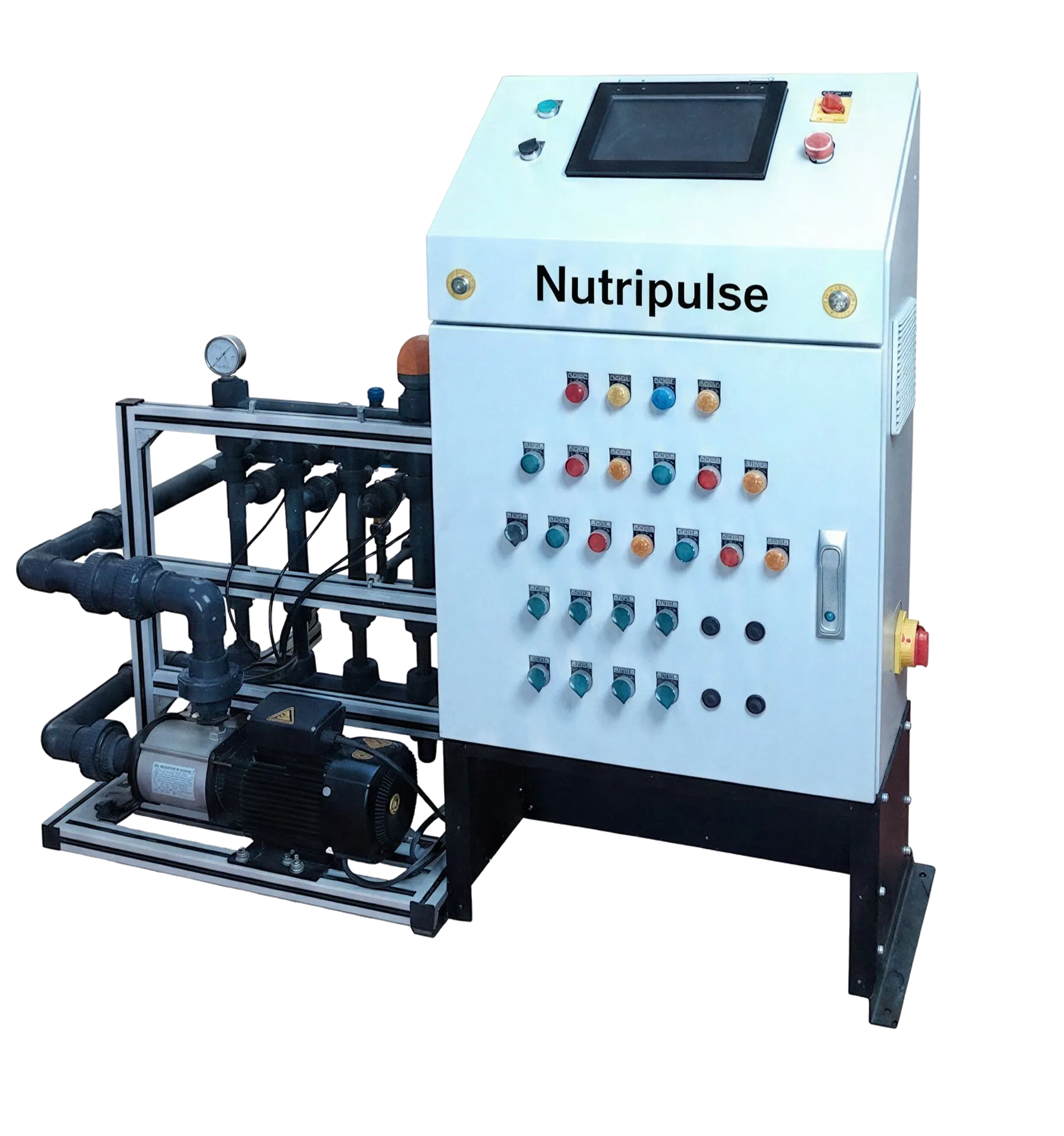
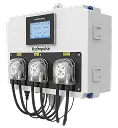
This single number, total recipes needed, tells you whether you need a simple fixed-ratio doser or a full-fledged controller with unlimited recipe storage. It's also the reason systems like Nutripulse from Hyperfarms are built around unlimited fertilizer recipes rather than a hardcoded few, because in Indian conditions, farms rarely stay single-crop for long.
2. How many valves do you have, and what are their flow rates?
Fertigation doesn't happen in isolation. It happens through your valves, zone by zone. Before you size a dosing system, you need to know:
- Total number of valves/zones across the farm (today, and realistically in 2-3 years)
- Flow rate of each valve in LPH: a drip zone running at 2,000 LPH needs a very different injection rate than a micro-sprinkler zone running at 8,000 LPH
- Whether valves run one at a time or in groups, since this directly affects how much fertilizer needs to be injected per unit time to hit your target concentration
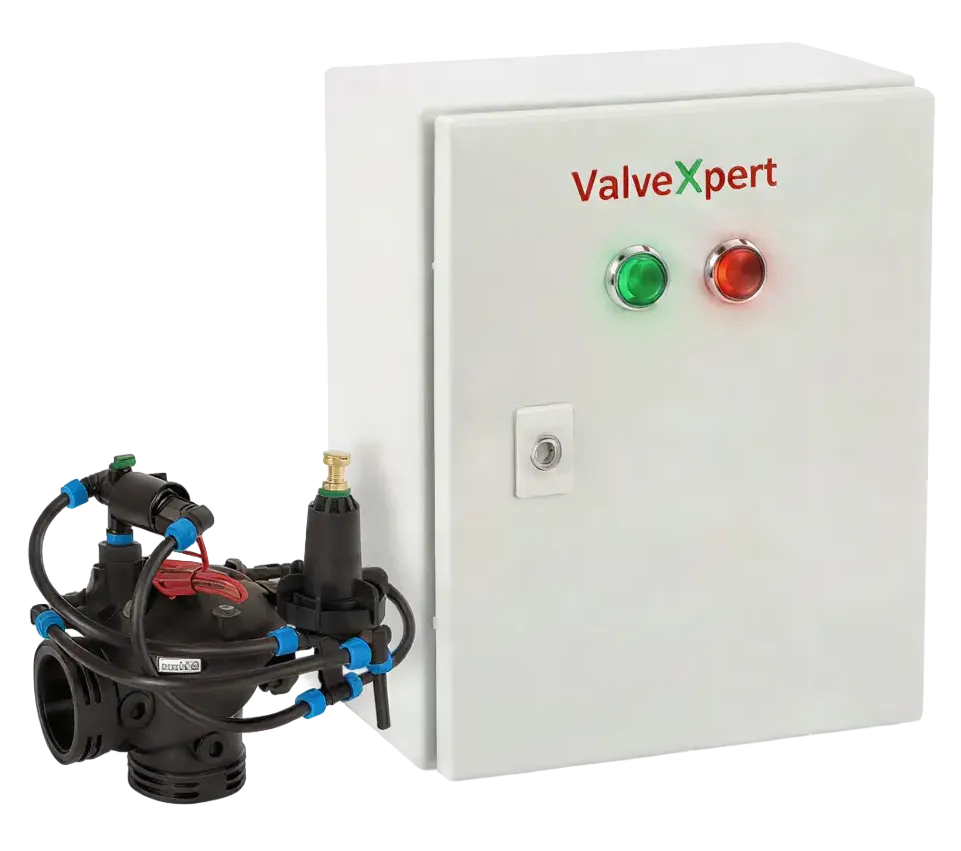
This is where a lot of DIY fertigation setups go wrong. The doser is sized for the "average" zone, and then either under-doses the high-flow zones or over-doses the small ones. A controller needs to know your valve count and flow rates to calculate injection rates correctly, which is also why systems built for Indian farms (like ValveXpert, handling 6+ valves with power-fail recovery) are designed around real field valve counts rather than a fixed 2-3 zone assumption.
If you're planning to scale, say from 5 acres to 25, it's worth asking for a system that supports more valves than you currently need. Retrofitting a controller because you outgrew it in year two is avoidable.
3. How well is your underlying drip irrigation designed?
This one surprises people: fertigation is only as good as the drip system underneath it. No dosing controller, however precise, can fix a poorly designed drip network.
Before adding any dosing automation, check:
- Uniformity of flow across the field: are drippers at the far end of a line getting the same flow as ones near the source?
- Pressure compensation, especially important on sloped land or long laterals
- Filtration: fertigation adds dissolved salts and micronutrients into the line; if your filtration isn't adequate, you're looking at clogged drippers within a season
- Line sizing and layout: is the mainline and sub-main sized correctly for the flow rates you calculated in point 2?
If your drip system has poor distribution uniformity, precision dosing just means you're precisely mis-delivering fertilizer. Some plants get too much, others too little, and you won't be able to tell just by looking at the controller's screen. Get your irrigation engineer to audit uniformity before layering automation on top.
4. What's your water source, and what's the water quality?
Your water source shapes almost every decision downstream: the pump, the filtration, and critically, the fertilizer recipes themselves.
Things worth testing and knowing before you plan:
- Source: borewell, open well, canal, pond, or municipal supply, each carrying different risks (sediment, iron, biological contamination, seasonal variability)
- Water EC and pH: this is your baseline. If your source water already has an EC of 1.2 mS/cm, your target fertigation EC and your actual injected fertilizer EC are two very different numbers
- Hardness and bicarbonate levels: high bicarbonate water needs acid dosing before nutrient dosing, or you'll get scaling and nutrient lock-out
- Iron, sulfur, or other contaminants that could clog drippers or react with fertilizer salts
- Seasonal variation: borewell water quality in India often shifts noticeably between summer and monsoon
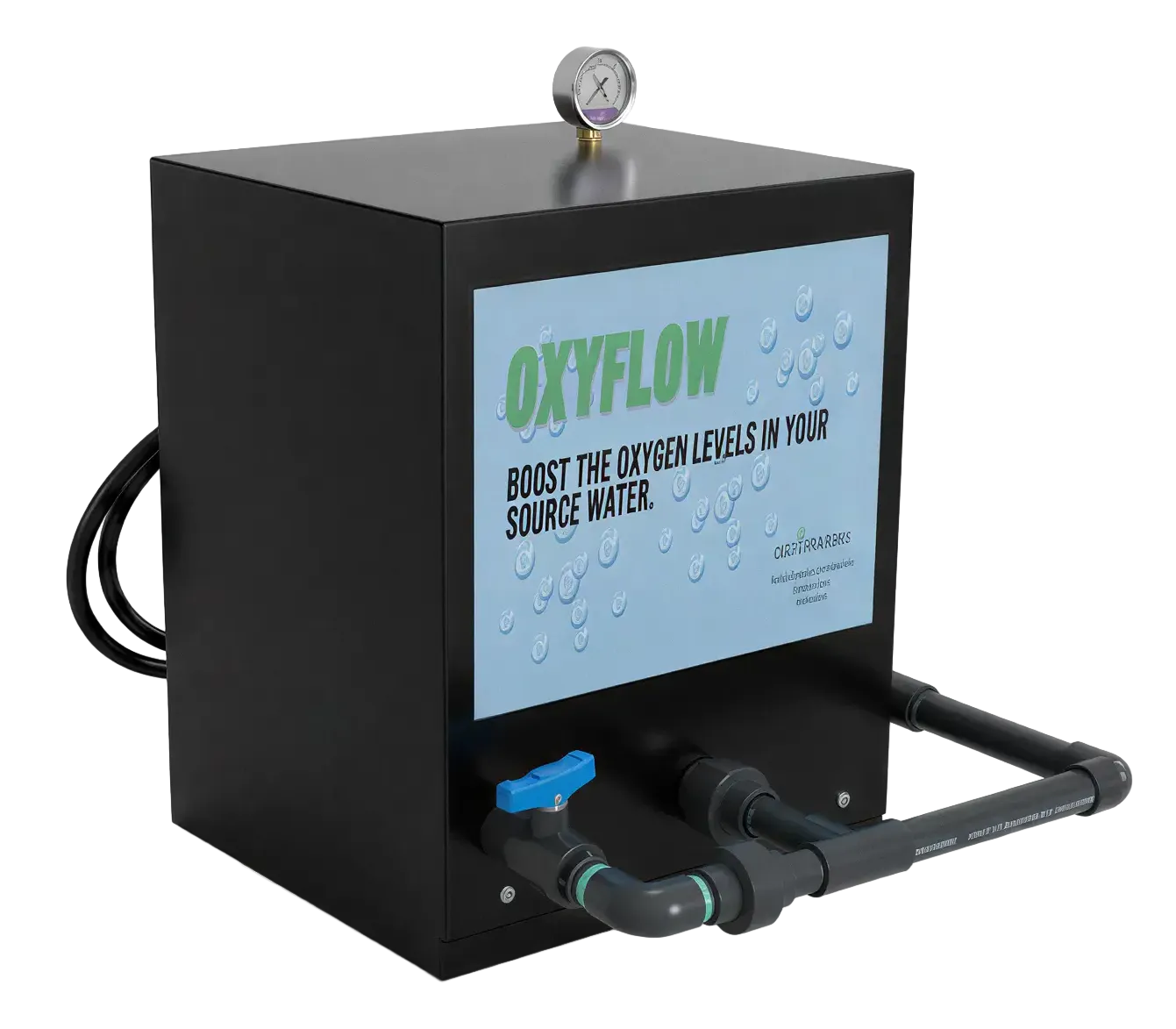
A good fertigation controller reads EC and pH in real time and adjusts dosing accordingly, but it can only compensate within a range. If your source water is wildly inconsistent, you may need water treatment (like oxygenation or filtration) before the water even reaches the doser. This is also why a growing number of farms are pairing dosing systems with inline oxygenation, enriching water quality at the source rather than only correcting for it downstream.
5. What dosing method do you actually need: time-based, volume-based, or proportional?
This is the technical heart of the decision, and it's where most of the cost difference between systems comes from.
- Time-based dosing: the fertigation system injects fertilizer for a fixed duration once irrigation starts. Simple, inexpensive, but doesn't account for flow variation. If your pump pressure fluctuates or valves open in different combinations, your actual concentration drifts.
- Volume-based dosing: fertilizer injection is tied to a water flow meter, so a fixed volume of fertilizer is added per unit volume of water, regardless of how fast or slow that water flows. More accurate than time-based, especially on farms with variable flow.
- Proportional (EC/pH-based) dosing: the system continuously reads EC and pH in the line and adjusts injection in real time to hit a target. This is the closest to "precision" fertigation, correcting for source water variability, mixing multiple fertilizer channels, and holding a stable nutrient concentration regardless of what's happening upstream.
The right answer depends on everything above: how many crops you're running, how consistent your water source is, how many valves and flow rates you're managing, and how tight you need your nutrient control to be. A small single-crop polyhouse might do perfectly well on volume-based dosing. A commercial multi-crop operation with variable source water and dozens of zones is going to need proportional EC/pH dosing to get consistent results, which is the approach most industrial-grade fertigation controllers used in Indian polyhouses and orchards are built around today.
Putting it together
None of these five questions exist in isolation, they build on each other. Your crop count decides your recipe count. Your valve count and flow rates decide your injection sizing. Your drip design decides whether dosing precision even matters in the field. Your water source decides how much correction your system needs to do. And all four of those together point you toward the right dosing method.
Skip this exercise and you'll end up buying (or building) a system sized for someone else's farm. Walk through it properly, and you'll walk into any vendor conversation, including ours, with a clear brief instead of a vague ask for "a fertigation system."
In the next post in this series, we'll go deeper into point 5 and break down exactly how time-based, volume-based, and proportional dosing perform in real field conditions across different Indian crop types.
Till then, Happy farming!