


Raspberry is one of the more demanding berries to grow commercially in India, but it is also one of the most rewarding. Supply is almost entirely imported, urban demand from cafes, bakeries and premium retail keeps climbing, and fresh fruit prices reflect that scarcity. The catch is that raspberry is unforgiving of shortcuts. Get the climate, substrate, or nutrition wrong and you lose fruit quality fast, sometimes within a single flush. This guide walks through what actually matters when setting up a raspberry farm in India, in the order these decisions need to be made.
Start with Climate, because it decides everything else
Raspberry is a cool-climate crop by nature. It wants moderate temperatures, ideally in the 15°C to 22°C range, and many varieties carry a winter chilling requirement before they'll fruit well. India's tropical and subtropical conditions work against this on the plains, which is why most commercial raspberry cultivation in the country happens either in the temperate hill belts of Himachal Pradesh, Uttarakhand and parts of Karnataka's higher elevations, or under protected structures that recreate cooler conditions artificially.
Heat doesn't just slow growth, it directly damages fruit quality. High daytime temperatures soften the berries and strip out flavor and shelf life, even when the plant itself looks healthy. This is the single biggest reason growers in warmer parts of the country lean on greenhouse covers with shading mesh (commonly 50%) to buffer day-night temperature swings. If you're planning a farm outside the traditional hill regions, this climate control layer isn't optional. It's the foundation everything else in the farm depends on.
Pick a Variety That Matches Your Climate, Not the Other Way Around
Once you know what climate conditions you can realistically deliver (natural hill cool, or greenhouse-moderated), variety selection follows directly from that. Primocane varieties, which fruit on current-season canes, have generally shown better adaptability to Indian conditions because they carry a lower chilling requirement than traditional summer-bearing types. Growers report consistent results with these lower-chill primocane types across commercial projects in warmer zones, though the same crop will also do well in cooler hill locations without needing as much artificial climate buffering.
Whatever variety you choose, verify its track record in conditions similar to yours before committing at scale. A mismatched variety shows up as irregular berry shape, poor fruit set, or a canopy that simply won't flush a second time, and by the time that's obvious you've already lost a season.
Soilless Substrate Is the Default for a Reason
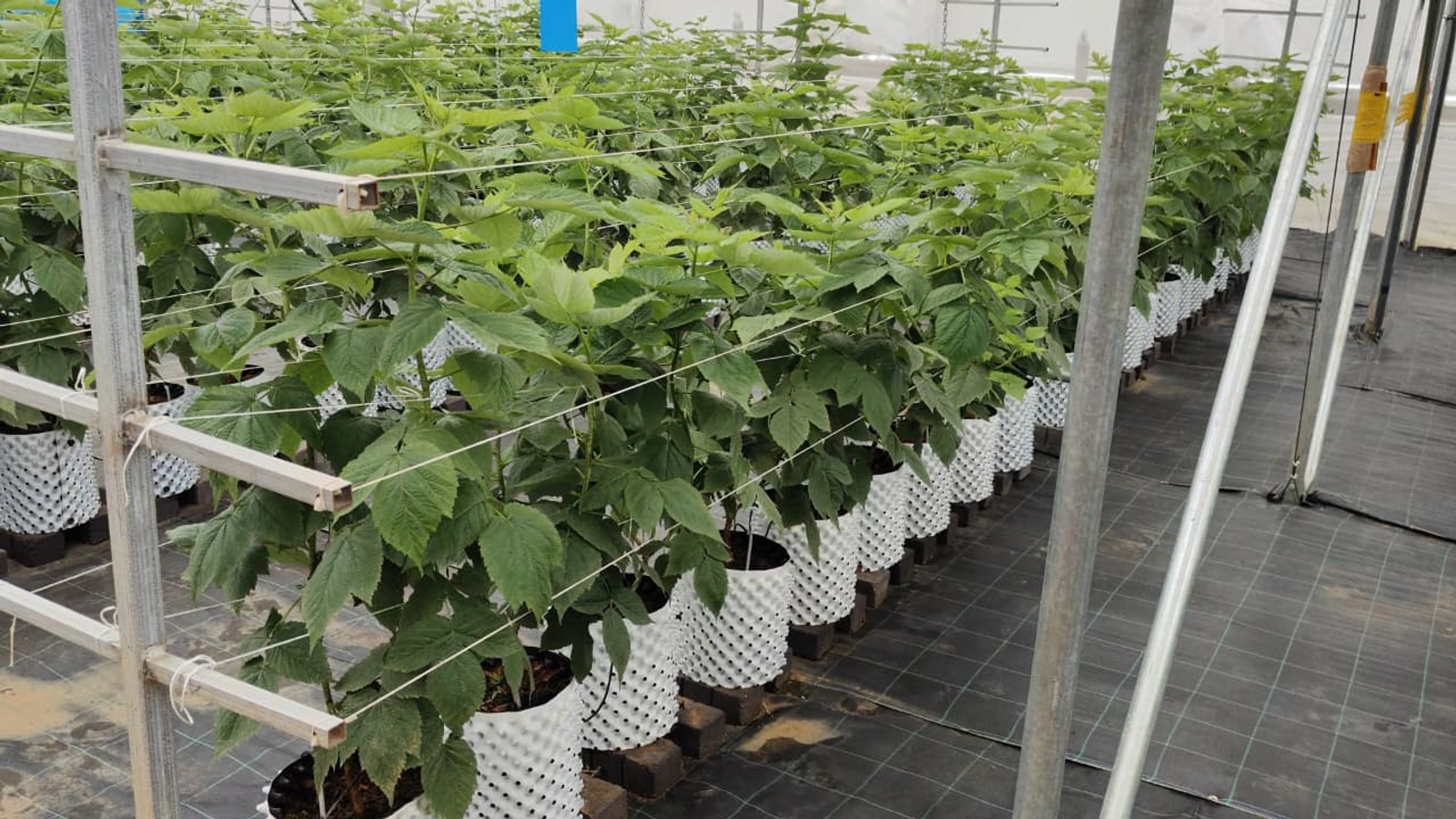
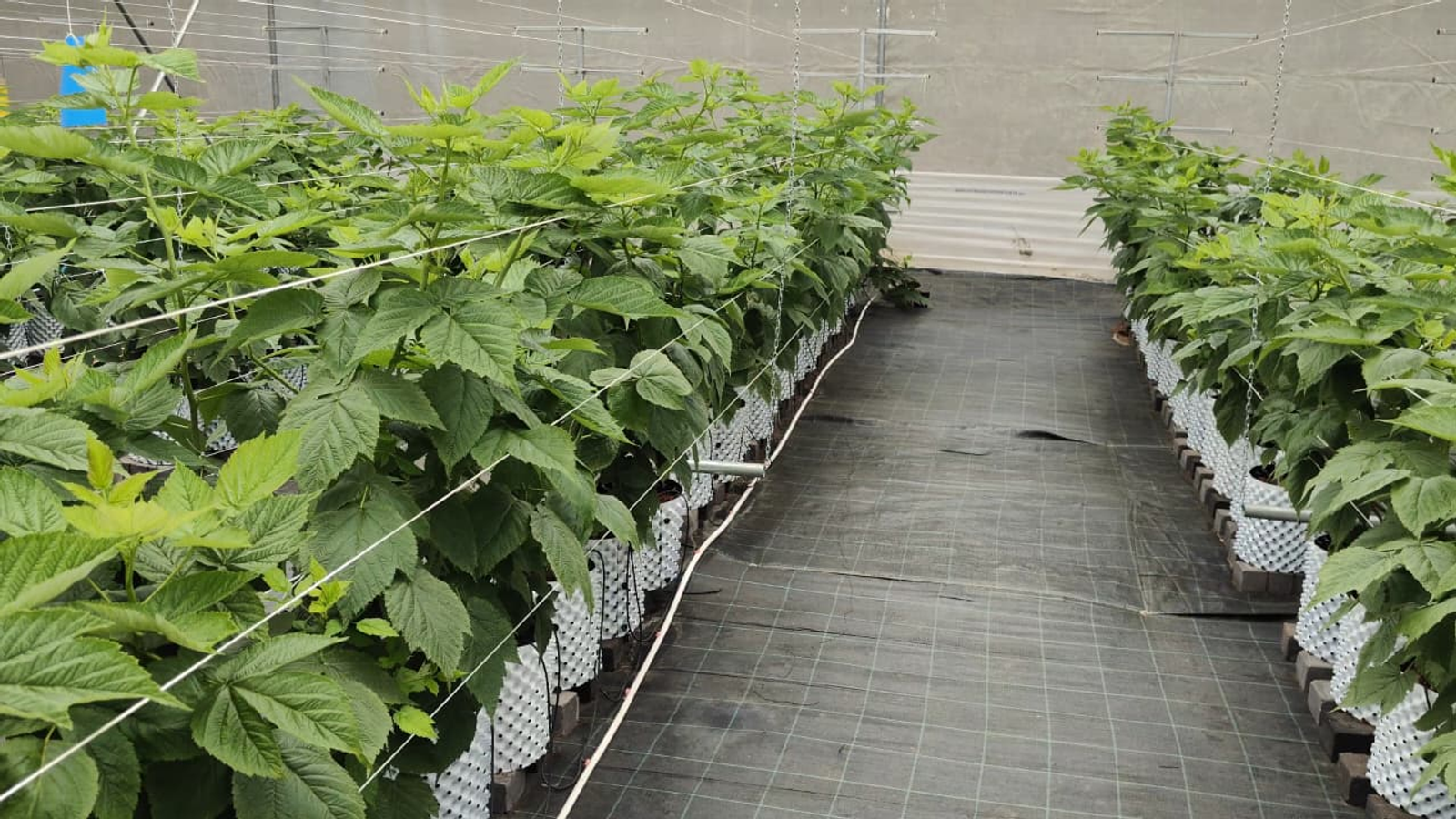
Commercial raspberry in India is now almost always grown in grow bags under protected cultivation rather than in native soil, and for good reason. Substrate culture gives you direct control over root zone aeration, moisture, EC, and pH, none of which you can reliably manage in open ground, especially in regions where the underlying soil isn't naturally suited to berries. Raspberry roots are also sensitive to waterlogging, so drainage has to be engineered into the system rather than hoped for.
This is where the technical planning sequence really starts to matter: how many zones your growing area splits into, how many grow bags sit in each zone, how many emitters per bag and at what discharge rate, and what that adds up to in terms of zone flow rate. Get this sequence wrong and you either underwater some bags while overwatering others, or you end up with a fertigation system that can't keep up with the number of zones you've built.
Precision in nutrition delivery
Raspberry nutrient demand is specific rather than heavy. Alongside the standard NPK requirement, boron and zinc matter more than they do for most crops. Boron in particular is tied to pollen tube development, and a shortfall shows up as crumbly, poorly formed fruit rather than a visibly sick plant, which makes it easy to miss until harvest.
Because the crop is grown in soilless substrate, nutrition is delivered almost entirely through fertigation, meaning the accuracy of your dosing system directly determines fruit quality. Recipe count (how many distinct nutrient formulations you need across crop stages) and stock tank sizing both flow from the same technical chain as the substrate setup above. This is also where EC and pH management becomes a daily discipline rather than an occasional check, since raspberry is less tolerant of drift in either than more forgiving crops like tomato or capsicum.
Pruning and Canopy Management Keep Disease Pressure Down
Balanced pruning does two jobs at once: it regulates yield by managing how many primocanes you carry forward, and it keeps the canopy open enough for airflow. That airflow matters because raspberry is vulnerable to Botrytis (grey mould) and Phytophthora root rot, both of which thrive in still, humid microclimates. Removing spent, lignified canes after fruiting isn't just tidying up, it's a direct disease control measure.
On the pest side, keep a regular watch for Drosophila suzukii (spotted wing drosophila), spider mites, and aphids. All three can build up fast in a closed protected structure if scouting is inconsistent, and by the time damage is visible on fruit, the population is usually already established.
Why Automation Becomes Necessary, Not Optional
Everything above, the temperature swings, the substrate EC and pH sensitivity, the precise micronutrient needs, the humidity driven disease pressure, points to the same conclusion: raspberry doesn't tolerate manual, best effort management at any real scale. Once you're running multiple zones and stages, and it becomes very difficult for manual monitoring to keep every zone within the narrow band raspberry actually needs, at that point automation is protecting the same margins that made this crop worth planting in the first place.
A 2-Acre Case Study: Soilless Raspberry Near Bengaluru
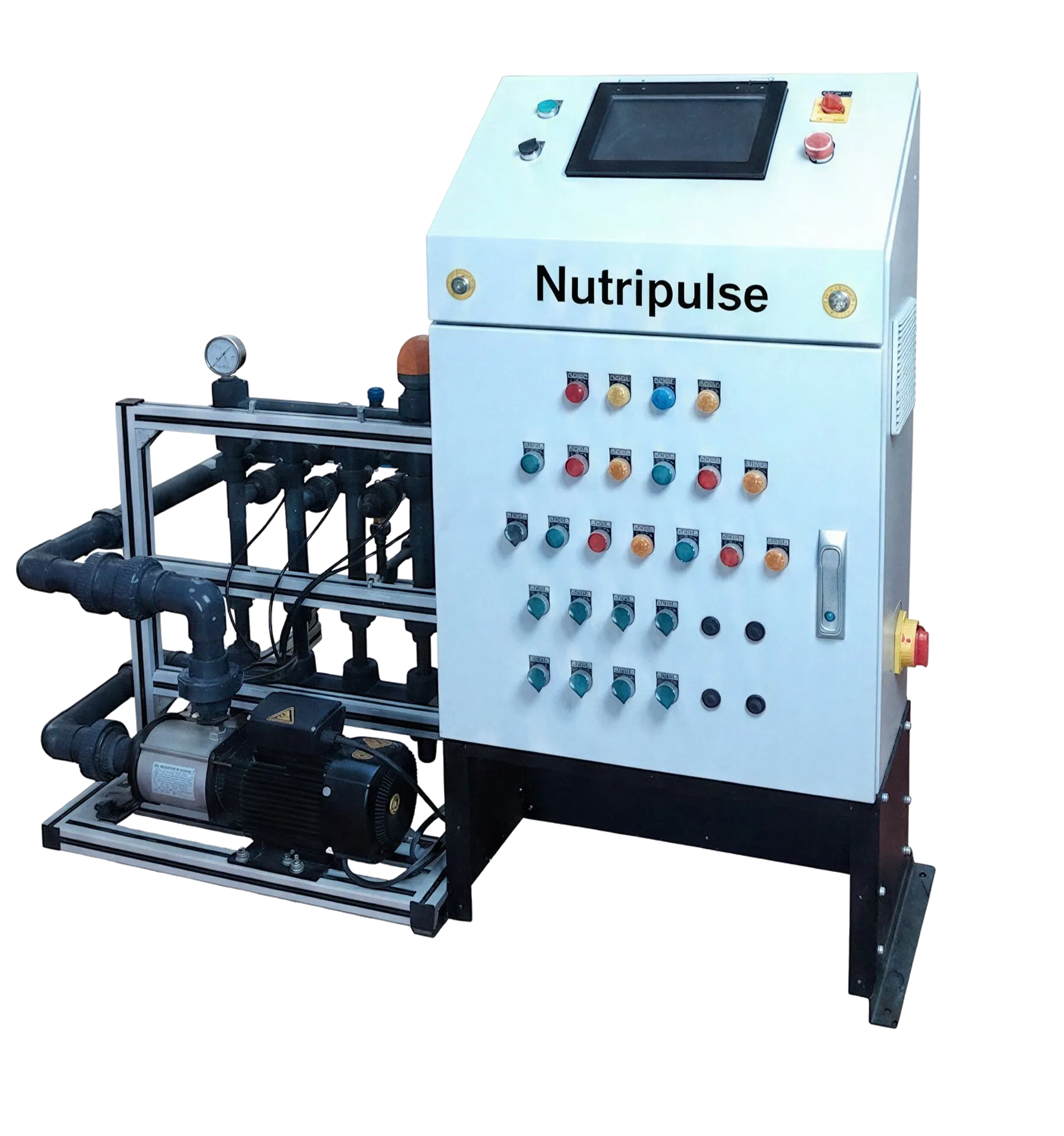
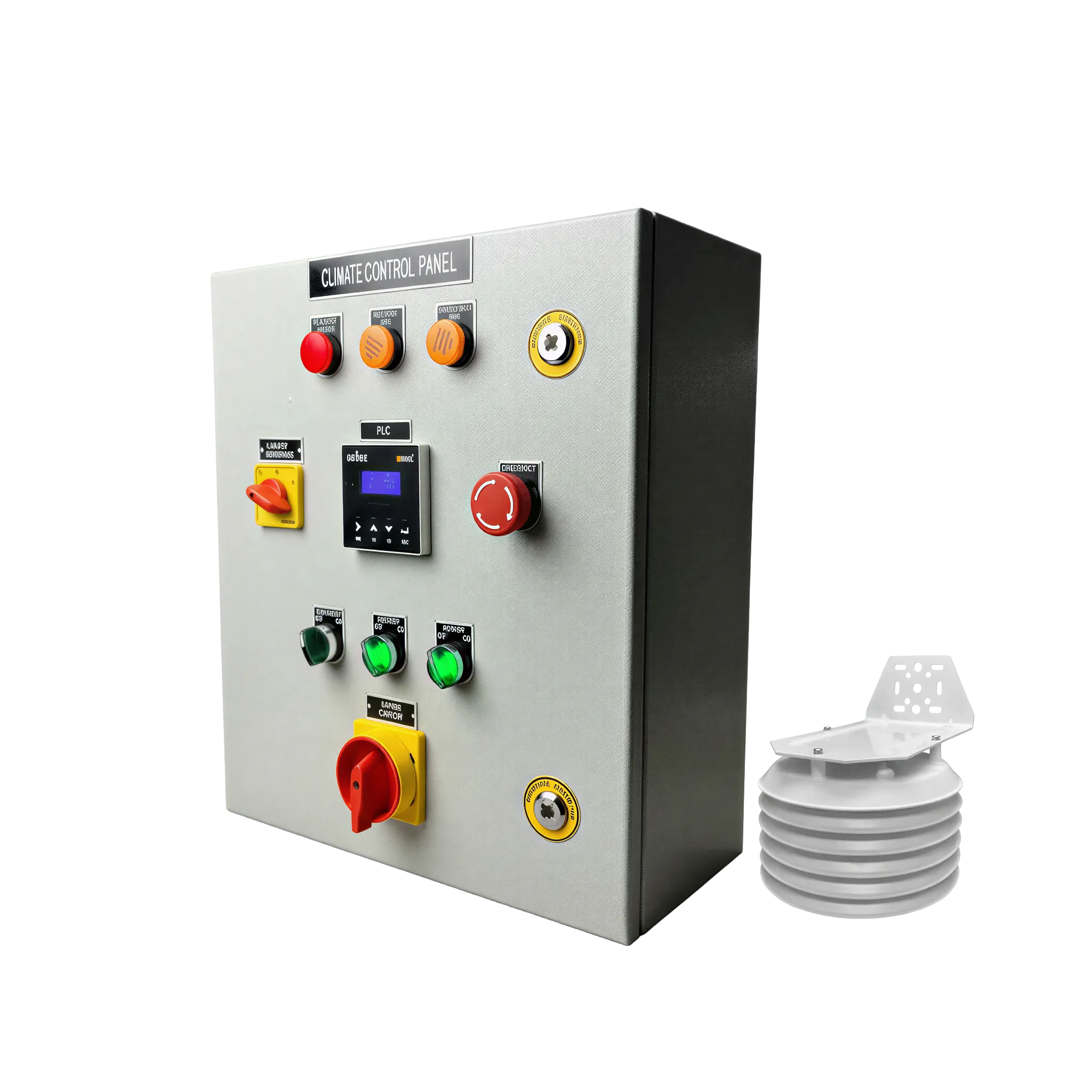
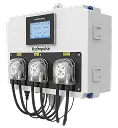
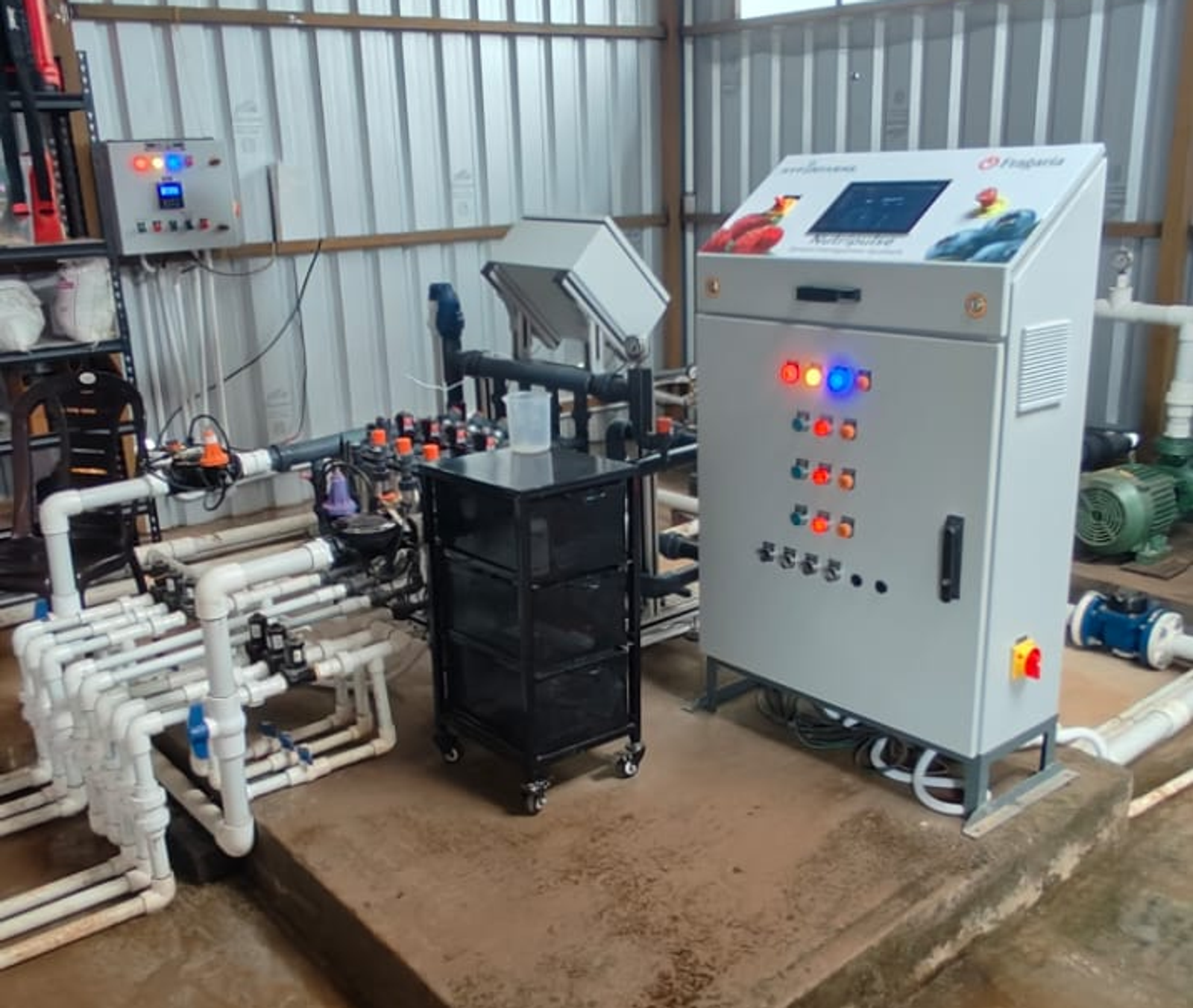
We recently commissioned a fertigation and climate automation setup for a 2-acre soilless raspberry farm in Nelamangala, Karnataka, running Hyperfarms Nutripulse for fertigation and our ClimateX controller for the greenhouse environment.
Nelamangala sits close enough to Bengaluru's moderate climate to be workable for raspberry with protected structure support, but it still sees warm spells that raspberry doesn't tolerate well without active intervention. The two systems are handling exactly the dependency chain described above, in practice:
- Nutripulse manages EC and pH-controlled dosing across the farm's fertigation zones, adjusting nutrient delivery to the grow bags without relying on manual tank mixing throughout the day. For a crop where boron and zinc precision affects fruit set directly, consistent dosing removes one of the more common sources of quality variation.
- ClimateX monitors and responds to temperature and humidity swings inside the protected structure in real time, which matters most during the hotter parts of the day when raspberry fruit quality is most exposed to heat stress.
The early feedback from the crop has been strong, with growers reporting cleaner, more consistent flushes since the automation went live. It's a good example of what the guide above is really arguing: raspberry rewards farms that treat climate and fertigation as one connected system rather than two separate jobs.
Getting Started
If you're planning a raspberry setup in India, work through the sequence in this order: confirm your realistic climate control capability first, choose a variety that fits it, design your substrate and zone layout around that variety's water and nutrient demands, then size your fertigation and climate systems to match. Skipping ahead to variety or substrate choice before the climate question is settled is the most common reason new raspberry projects underperform in their first year.